Strength Testing… how do we do it?
Our therapists at Neuro Junction measure strength in lots of different ways in order to determine any impairments that can then be addressed with an exercise program.
Manual Muscle Testing
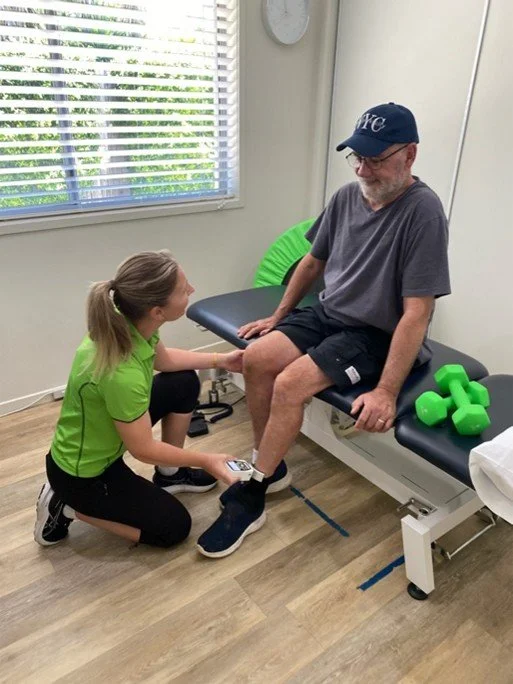
We might use manual muscle testing (the Oxford Scale)
Which tests key muscle groups against the therapists resistance and this then then graded on a score out of 5 based on the following criteria:
Flicker of movement
Through full range actively with gravity counterbalanced
Through full range actively against gravity
Through full range actively against some resistance
Through full range actively against strong resistance
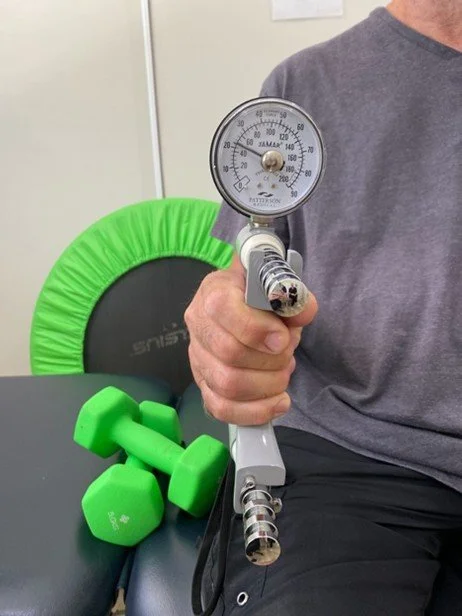
Dynamometers
We might use a force dynamometer
Which measures peak force production during a specific movement in a specific direction. These devices give us more “objective” data as they measure the exact amount of force that the muscle group being tested can exert with the joint held at a specific angle, in short, a device that can measure your strength in numbers.
Functional Tasks
We might use a functional task
For Example – how many sit to stands can a person perform from a chair of a standard height without using their arms to help in 30 seconds? Can the client walk on their toes?
Weight Measures
1-Repetition Maximum (1RM): The heaviest weight you can lift once for an exercise (e.g., squat, bench press)…… More on this in our next blog!!
The Physiotherapists and Occupational Therapists at Neuro Junction will then design and tailor a strength program to help ensure we can help you become stronger, healthier, and overcome any challenges and kick your goals!
Written by Samuel Brown, Physiotherapist.