Sensory Retraining
After an injury or neurological condition, your senses can be impaired this might include:
Touch
Pain
Proprioception (awareness of joint position in space)
Kinesthesia (awareness of joints moving)
Vibration
Sterognosis (the ability to identify objects by touch alone, without other senses such as seeing or hearing, the brain uses tactile sensory input (feeling the object), pressure, position, motion, texture, weight, and temperature to help identify the object)
Loss of these “senses” can make everyday tasks more challenging. Sensory retraining helps your brain and body relearn these skills, improving coordination, confidence, and independence. This often includes impairment in light touch and pain sensation, proprioception, vibration, kinesthesia and stereognosis.
Who Can Benefit?
Sensory retraining is useful for people experiencing:
Stroke: Changes in touch, movement control, or balance on one side of the body
Traumatic Brain Injury (TBI): Altered sensation or coordination
Multiple Sclerosis (MS): Numbness, tingling, or reduced proprioception
Parkinson’s Disease: Impaired sensory feedback affecting hand function and gait
Peripheral Nerve Injuries: Reduced sensation in hands or feet, e.g., from nerve compression or lacerations
Orthopedic Injuries or Surgeries: Temporary loss of sensation or coordination in affected areas
How Physiotherapy Helps
Physiotherapists focus on body and movement through:
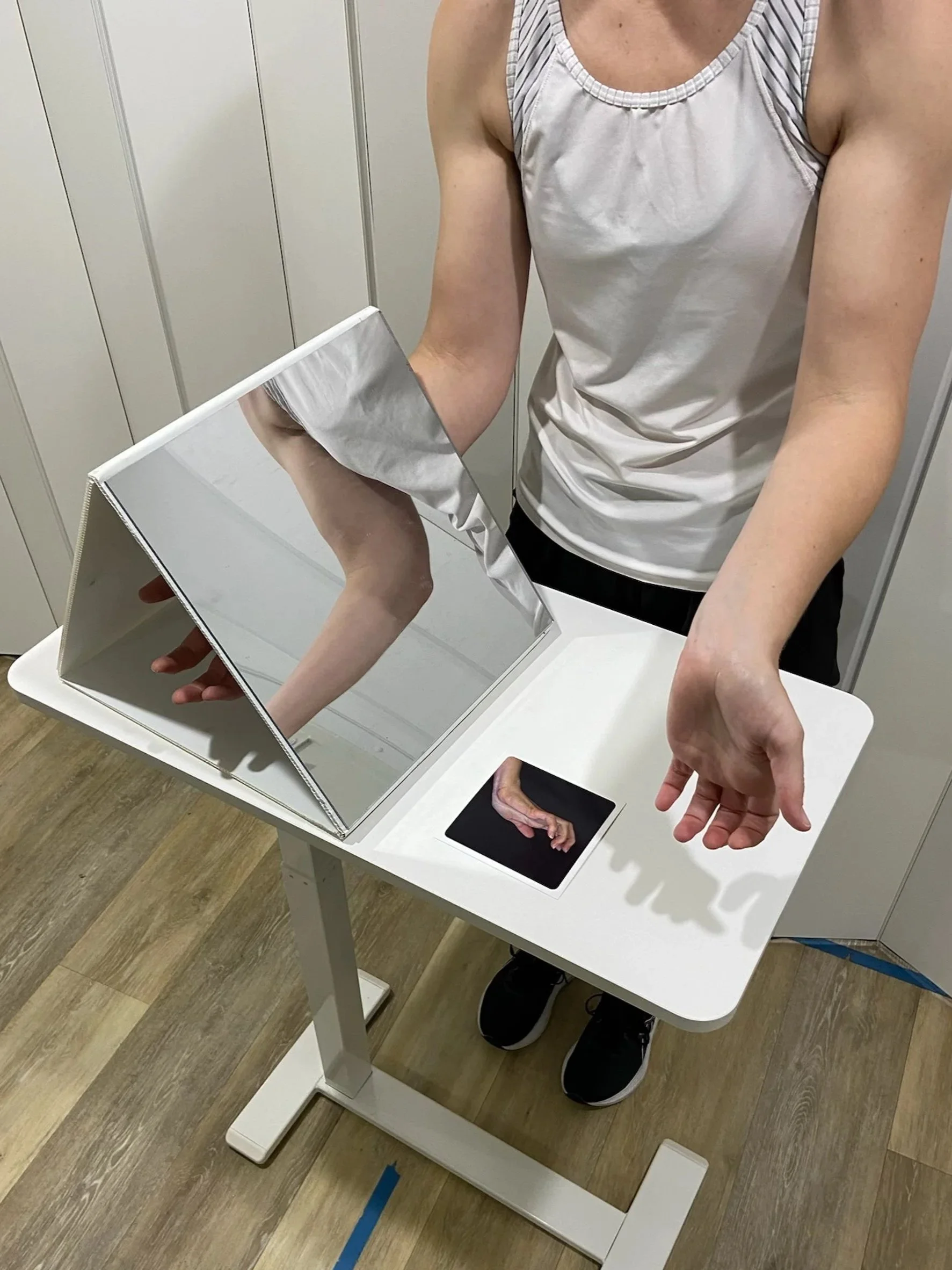
Mirror Therapy
Balance and proprioception exercises: Standing on uneven surfaces, using balance boards, or performing weight shifts to improve body awareness and stability
Functional movement retraining: Practicing walking, reaching, or bending while paying attention to feedback from your muscles and joints. This might include mirror therapy (Using movements of the stronger body part to ‘trick our brain’ into thinking that the weaker body part is moving as pictured)
Tactile stimulation exercises: Handling objects with different textures, temperatures, or weights to help the nervous system process sensory information correctly
Integration into daily activities: Incorporating these exercises into real-life tasks like walking on stairs, picking up groceries, or reaching for objects
How Occupational Therapy Helps
Occupational therapists focus on applying sensory retraining to everyday tasks:
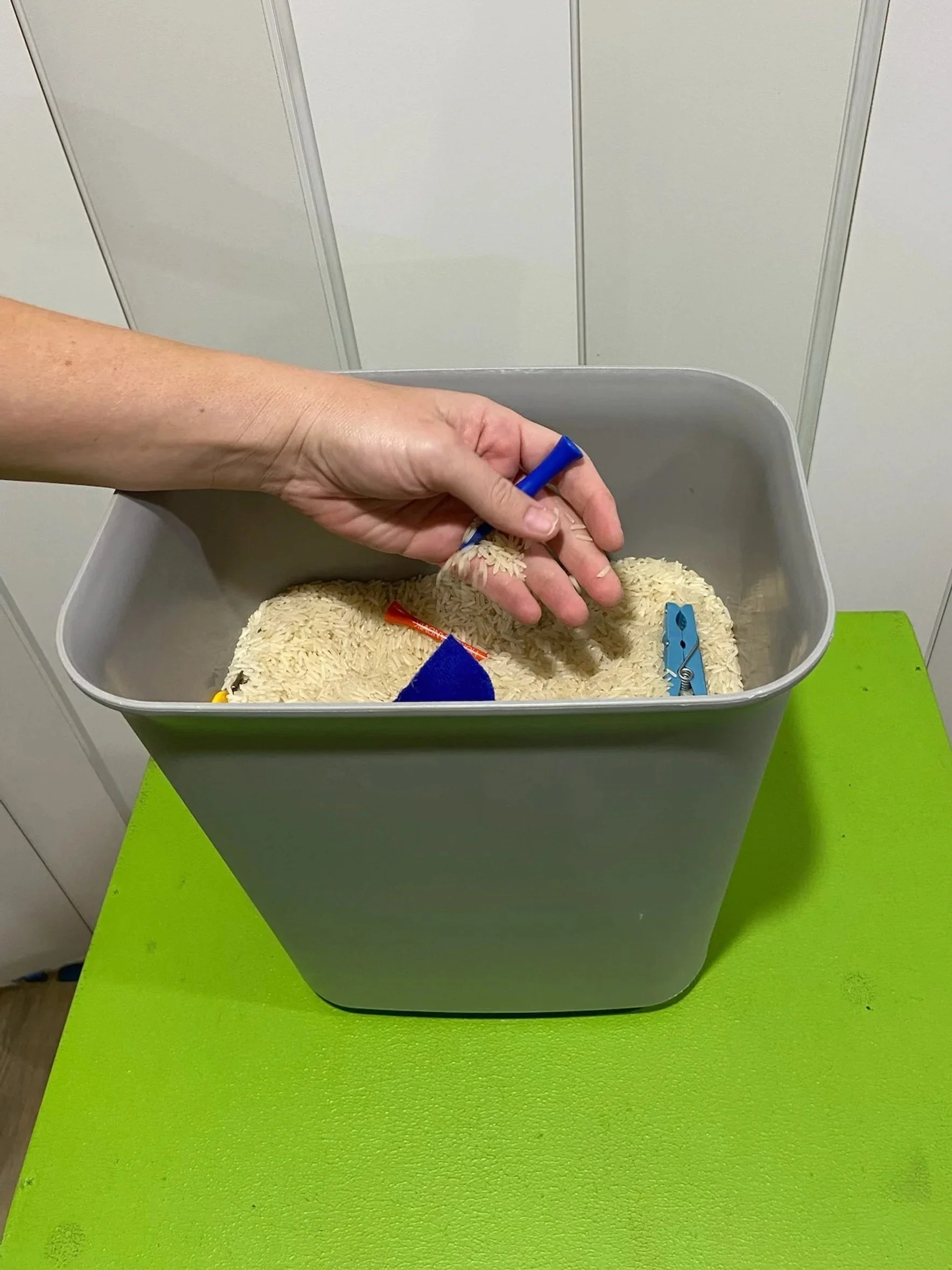
Retraining Sterognosis
Fine motor and hand exercises: Manipulating coins, buttons, therapy putty, or small objects to improve coordination, dexterity, and tactile feedback
Task adaptation: Breaking down activities like dressing, cooking, or writing into smaller steps and practicing each component to improve control and confidence
Adaptive tools and equipment: Using grips, textured utensils, weighted items, or specialized keyboards and pens to enhance sensory input and make tasks easier
Environment modifications: Adjusting lighting, floor surfaces, or furniture layout to provide clearer sensory cues and support safe, independent movement
If you are experiencing sensory issues, or know someone who is, please contact us for an assessment and tailored rehabilitation plan.
More information: