Cryoneurolysis: An Emerging Treatment Option for Spasticity
For many people living with neurological conditions such as stroke, multiple sclerosis, cerebral palsy, traumatic brain injury, spinal cord injury or other neurological disorders, spasticity can significantly impact comfort, movement and everyday function.
While physiotherapy and occupational therapy remain the cornerstone of spasticity management, new treatment options are continuing to emerge. One such option is cryoneurolysis, a minimally invasive procedure that is showing promising results in the management of spasticity.
What is Spasticity?
Spasticity is a condition where muscles become overactive, tight or stiff due to damage to the nervous system. This can make movement difficult, contribute to pain, affect positioning and increase the risk of contractures (permanent muscle shortening).
Managing spasticity effectively often requires a combination of therapies tailored to the individual's goals and functional needs.
What is Cryoneurolysis?
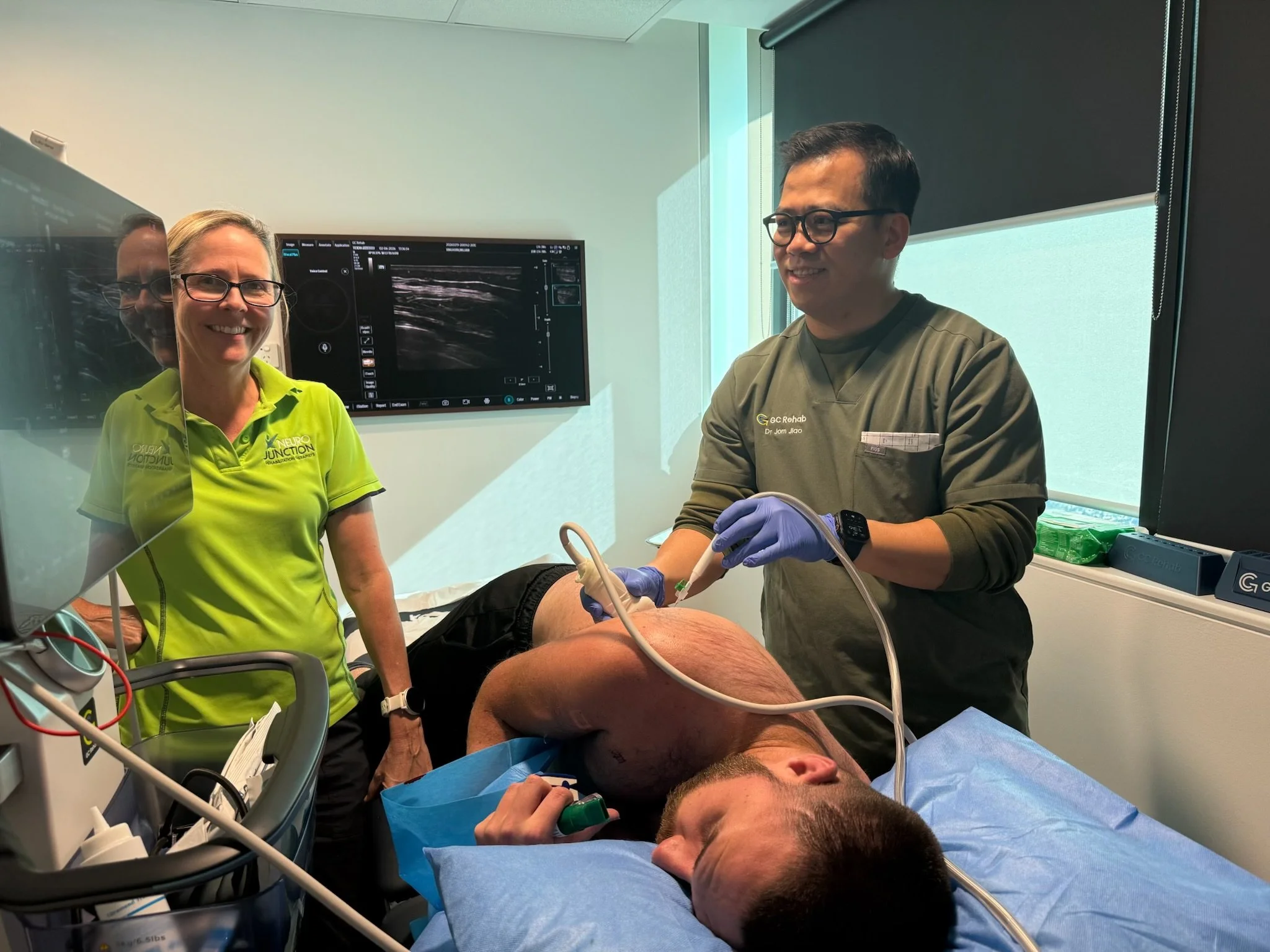
Cryoneurolysis is a minimally invasive procedure that uses extremely cold temperatures (between -20°C and -100°C) to temporarily interrupt the function of specific peripheral nerves.
The procedure is performed using ultrasound guidance, allowing the treating clinician to accurately target the nerve involved. A specialised probe creates a small ice ball around the nerve, resulting in a temporary interruption of nerve conduction.
Importantly, while the nerve fibres undergo a process called axonotmesis (temporary degeneration), the surrounding nerve structures remain intact. This allows the nerve to regenerate naturally over time, typically at a rate of approximately 1–2 mm per day.
The effects of treatment generally last between 3 and 12 months, depending on the nerve treated and individual factors.
How Does Cryoneurolysis Help Spasticity?
Traditionally, cryoneurolysis has been used to target sensory nerves for pain management. More recently, clinicians have begun using it to target motor or mixed nerves involved in muscle overactivity and spasticity.
Before treatment, diagnostic nerve blocks may be used to identify which muscles are contributing to spasticity and determine whether the muscle tightness is potentially reversible. This helps clinicians select the most appropriate treatment targets and predict the likely response.
Cryoneurolysis is increasingly being used for spasticity management in countries including Australia, Canada, the United States, the United Kingdom, France, Spain, Denmark and Luxembourg.
Potential Advantages of Cryoneurolysis
While research is still emerging, cryoneurolysis offers several potential advantages:
Reduced risk of damage to surrounding tissues compared with chemical nerve treatments
Potentially lower cost than botulinum toxin (Botox®) treatment
No maximum treatment dose, allowing multiple muscle groups to be addressed if appropriate
Effects may last longer than botulinum toxin in some cases (up to 12 months)
Not contraindicated during pregnancy, unlike botulinum toxin
Lower systemic side effects compared with oral medications used for spasticity
May be useful when botulinum toxin dosage limits have been reached or effectiveness has reduced over time
What Does the Research Show?
Cryoneurolysis is an exciting but relatively new area of spasticity management, meaning the evidence base is still developing.
One study involving 59 patients reported improvements in:
Range of movement
Spasticity levels
Pain scores
These improvements were maintained at one-year follow-up.
Several additional case reports have also demonstrated positive outcomes for lower limb spasticity.
While further research is needed, the early results are encouraging and suggest cryoneurolysis may become a valuable addition to the spasticity management toolkit.
The Essential Role of Physiotherapy and Occupational Therapy
Regardless of the medical treatment used, physiotherapy and occupational therapy remain critical components of successful spasticity management.
Before Cryoneurolysis
Physiotherapists and occupational therapists help to:
Assess movement and function
Identify meaningful goals
Assist with patient selection
Evaluate response to diagnostic nerve blocks
Determine how reducing spasticity may improve everyday activities
After Cryoneurolysis
The period following treatment provides an important opportunity to maximise gains in movement and function. Therapy may focus on:
Stretching and maintaining range of motion
Strengthening weaker muscle groups
Motor retraining and movement practice
Improving mobility and functional activities
Preventing recurrence of contractures
Monitoring long-term functional outcomes
By taking advantage of the reduction in muscle tone, therapy can help translate changes in spasticity into meaningful improvements in daily life.
Looking Ahead
Cryoneurolysis is an emerging treatment option that may offer new possibilities for people living with spasticity. While further research is needed, early evidence suggests it may help reduce muscle overactivity, improve movement and support participation in everyday activities.
If you are living with spasticity and would like to learn more about the range of treatment options available, speak with your physiotherapist, occupational therapist or rehabilitation specialist to determine what approach may be most appropriate for your individual needs and goals.
This version is written for patients and carers, explains the science in accessible language, and positions physiotherapy and occupational therapy as essential components of successful spasticity management.
References
• Shaikh, S., Khan, A. R., Saini, S., Naimat, A., Amudha, C., Bannur, D., ... & Fakhruddin, N. (2025). Cryoneurolysis: A comprehensive review of Applications in Pain management. Cureus, 17(2).
• Hughes, A., Hashemi, M., Schatz, L., Gatenby, D., & Winston, P. (2025). Cryoneurolysis for Managing Spasticity in Multiple Sclerosis: A Case Report Demonstrating Sustained Functional Gains and Cost-Effectiveness. Archives of Rehabilitation Research and Clinical Translation, 100464.
• Winston P, Vincent D. Cryoneurolysis as a Novel Treatment for Spasticity, Associated Pain and Presumed Contracture. Adv Rehabil Sci Pract. 2024 Sep 30;13:27536351241285198. doi: 10.1177/27536351241285198. PMID: 39377080; PMCID: PMC11457193.