Hoist Transfers and the Role of Your Occupational Therapist and Physiotherapist
As mobility changes due to ageing, neurological conditions, or injury, transferring safely between a bed, chair, wheelchair, or toilet can become more difficult. Hoists and slings are valuable pieces of equipment that help make transfers safer for both the person being assisted and their carers.
Choosing the right equipment is not a one-size-fits-all process. Physiotherapists and Occupational Therapists work together to assess your needs and recommend equipment that promotes safety, comfort, and independence.
What is a Hoist?
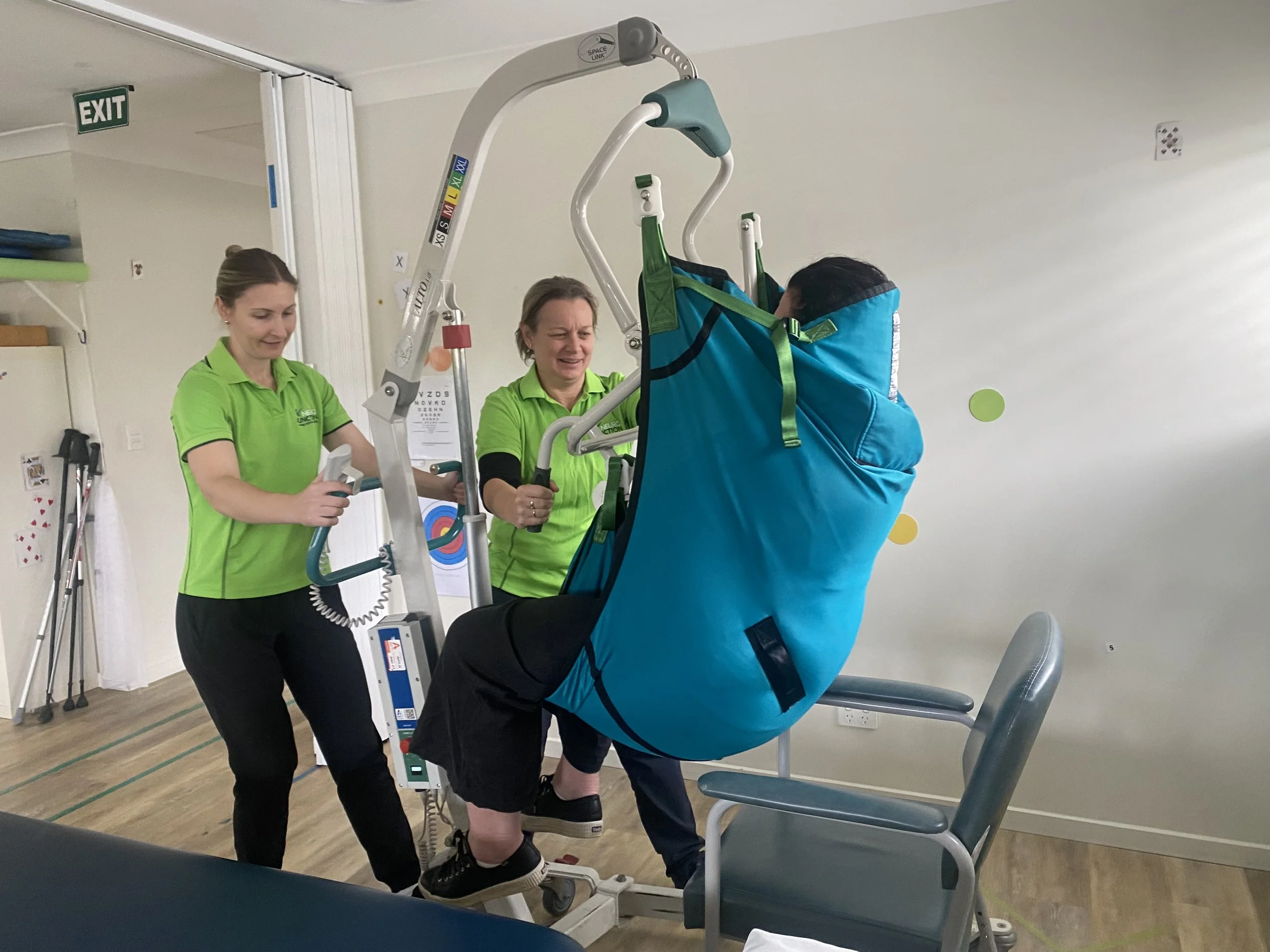
A hoist is a mechanical lifting device used to safely transfer a person who is unable to stand or move independently. The most suitable hoist depends on your mobility, strength, balance, home environment, and care needs.
Why is the Right Sling Important?
The sling is the fabric support that attaches to the hoist. Selecting the correct sling is just as important as choosing the hoist itself.
There are many different sling styles, including:
General-purpose slings for everyday transfers.
Toileting slings that allow easier access for personal care.
Full-body or hammock slings for people requiring maximum support.
A poorly fitted sling can be uncomfortable, increase the risk of skin injury, or make transfers unsafe. Your therapist will ensure the sling is the correct size, style, and attachment type for your body shape and functional abilities.
The Role of Your Occupational Therapist
Occupational therapists focus on how you complete everyday activities safely within your home.
They assess:
Bathroom and bedroom layout
Wheelchair compatibility
Functional goals
Carer assistance requirements
Home modifications
Equipment funding through programs such as the NDIS or My Aged Care
They may also recommend additional equipment such as shower commodes, transfer benches, pressure care cushions, or bed equipment to support safe daily living.
The Role of Your Physiotherapist
Physiotherapists assess your physical abilities and determine the safest method of transferring. They consider factors such as:
Strength and ability to weight bear
Balance and sitting control
Muscle tone or spasticity
Pain and fatigue
Risk of falls
Where appropriate, physiotherapists also prescribe exercises and mobility training to help maintain or improve transfer ability, with the goal of maximising independence.
Working Together for Safe Transfers
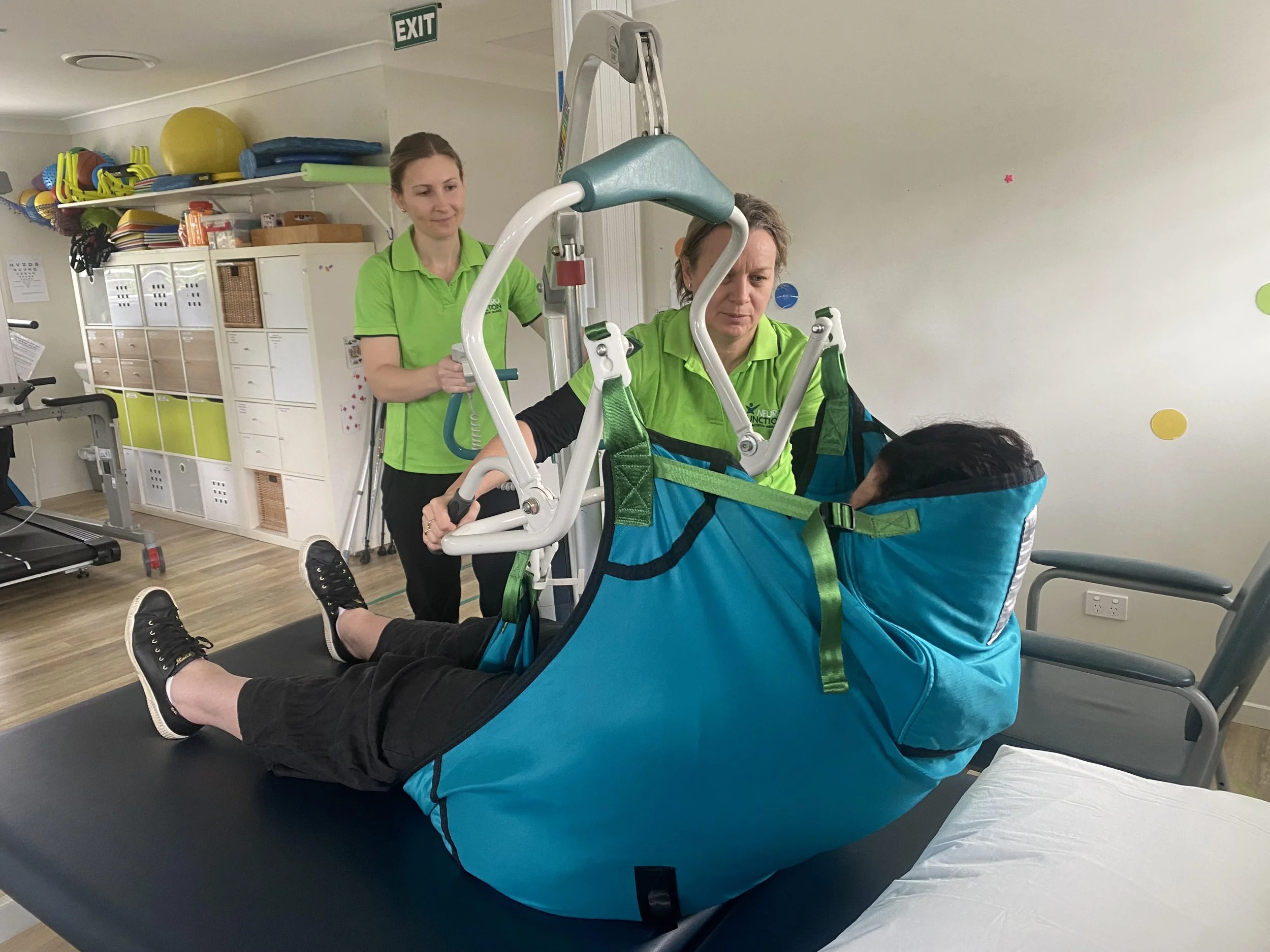
Physiotherapists and occupational therapists often complete joint assessments to ensure all aspects of a transfer are considered. Together they determine:
The safest transfer method
The most appropriate hoist and sling
Whether one or two carers are required
Carer training and safe manual handling techniques
Equipment that best suits your home and long-term needs
Regular reviews are important, as equipment needs may change if your mobility or health changes over time.
Take Home Message
The right hoist and sling can significantly improve safety, comfort, and independence while reducing the risk of injury for both the person being transferred and their carers. A comprehensive assessment by your physiotherapist and occupational therapist ensures the equipment is tailored to your individual needs, home environment, and goals, allowing transfers to be completed safely and with confidence.